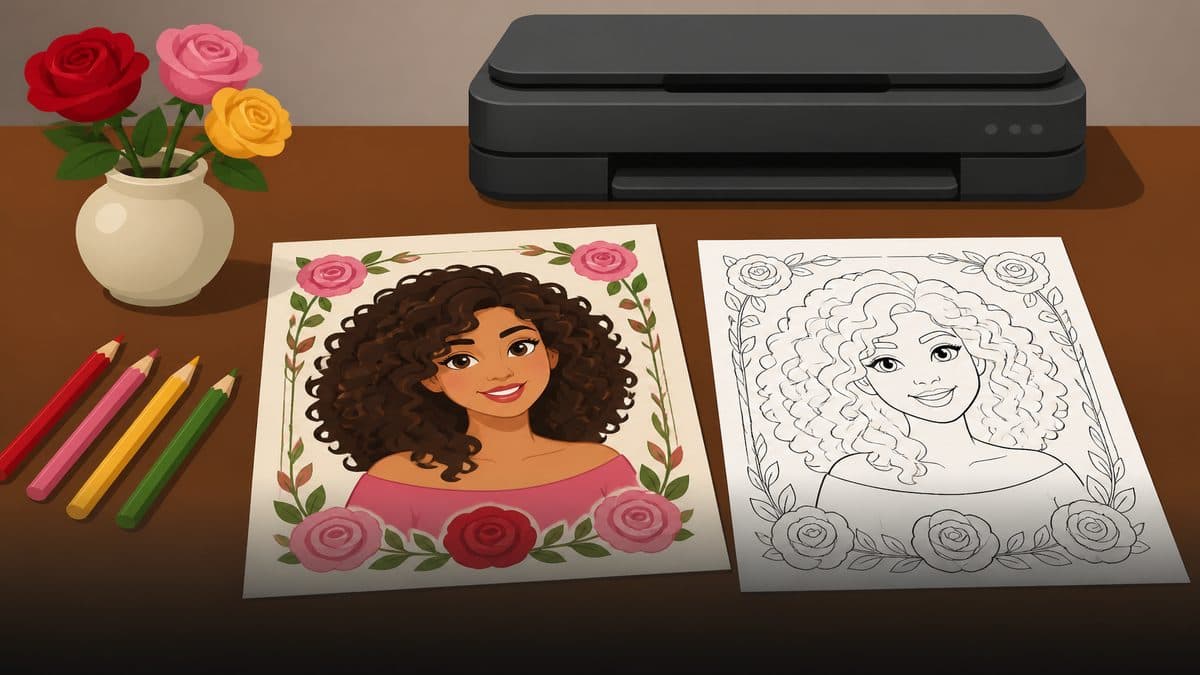
A4, A5 or mini-book: the format changes everything, from coloring comfort to how many sheets you burn. What to know before you hit print — paper included.
Printing your own coloring book isn't complicated, but three upfront choices decide the result: format, paper, and how you hold the pages together. None of them needs special equipment — you just need to know what you're trading away.
Choosing the format
- A4: one page per sheet, the most comfortable for markers or pencils. Also the most paper-hungry.
- A5: two pages per sheet. A good compromise for kids, who rarely color to the edges anyway.
- Mini-book: several pages per sheet, folded. Great as a gift or for travel, less so for a long session.
Paper matters more than you'd think
Standard printer paper (80 gsm) is fine for colored pencils. As soon as you switch to markers, ink bleeds through and marks the next page: 120 gsm fixes it for a few cents more per sheet. For watercolor you need 200 gsm — and to accept that a household printer doesn't always cooperate.
Holding the pages together
The simplest binding is still the best: two staples in the margin, or a bulldog clip. A hole punch and a ribbon make a book that opens flat — which is what actually matters when coloring, because a page that keeps closing ruins the session. Skip glue: it warps thin paper.
In Pintej, PDF export offers these three formats directly, for the whole book or only the pages you pick. You need a printer — there's nothing to order and nothing sent to a print shop.